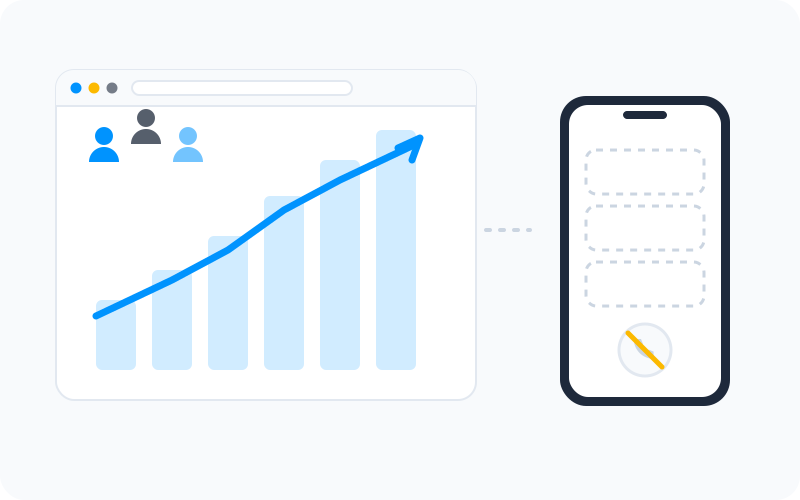
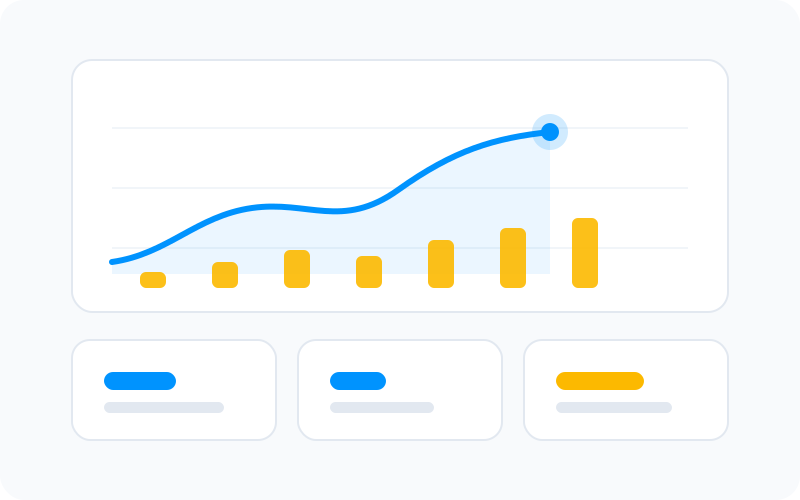
Google publishes a performance report for every profile: how many people saw it, how many called from it, how many asked for directions, how many clicked through to the website, and which searches led to it. Those are the numbers that matter, because they are actions rather than impressions, and they are the numbers we send you every month in plain English.
What we can measure honestly: the calls, direction requests and website clicks the profile recorded, how those compare with the previous period, and which searches Google says produced them. What nobody can measure honestly is the counterfactual — we can show that calls from the profile rose; we cannot prove what would have happened if nobody had touched it, and an agency that presents a graph as proof of causation is overstating what the data supports.
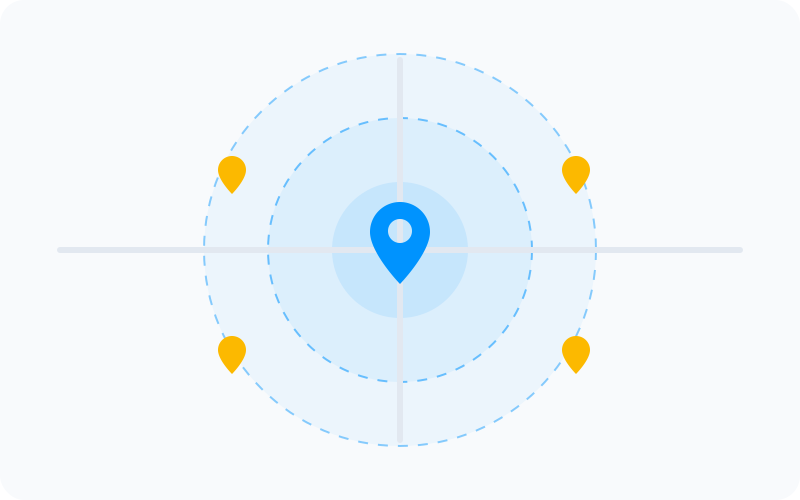
Map rankings are a poor headline number. They change street by street, they are personalised, and the position you see from your own desk is not what a customer three towns over sees. We report them as context, never as the result.
Profile changes tend to show up faster than website changes — a corrected category or a set of real photos can move the map within weeks rather than months — but the honest range depends on your competition, and a realistic timeline for local businesses sets out what governs the pace. If you want visibility before then, paid search can put the phone number in front of people from the first week.